WEEK 2
- Mar 10, 2017
- 2 min read
(5th – 9th March 2017).


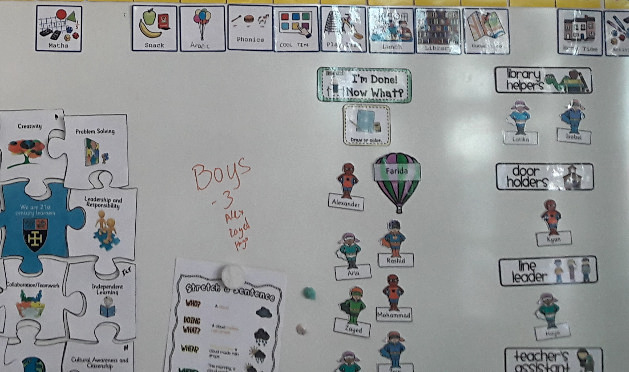
Throughout this week, I focus on understanding my MST's system for managing behavior in her classroom. There are many challenges behavior that MST faces every day with her students. For instance, after a library session, the teacher speaks directly to three students because they were speaking during reading time. The teacher explains to students that this type of attitude is not accepted at all. As a result, students who break the rules in the library will delay from play time for 5 minutes. However, in another case, I observed my MST gives stickers for students who behave very well during weekly assembly. From many situations, I figure out that my MST teach pupils the importance of following the classroom rules. For instance, she considers introducing the classroom rules from time to time. In addition, MST offers positive reinforcement like rewards and negative reinforcement such as ignore the student. Also, MST has punishment strategies like preventing the student from golden time. I clearly inferred that my MST is aiming to teach children the consequences of their attitude. According to Skinner, children’s behavior is a result of their learning experiences. As Skinner states, there are three types of reinforcement: positive/ negative reinforcement and punishment that what MST applied in her classroom. In my opinion, we should give priority to teaching learners the concept of consequences because children will need this knowledge in all real life situations. In my opinion, managing students’ behavior is a challenging task especially for new teachers. As a student teacher, my biggest fear when I teach is to lose control in students’ behavior. During this week, I give priority to learning new strategies for behavior management in the regular classroom. I realized that controlling behavior in my future classrooms will affect directly on my performance as a teacher.


Comments